 UpScale.build

Everyone on the job, at no extra cost
Your builder, your QS, your architect, your client — all invited free, up to 50 on a project. Nobody gets left off the record to save a licence, which is how the record stops being true.
Built by a developer who ran feasibilities at midnight and chased claims through email chains.
The margin you underwrote on day one stays in front of you through every variation, claim and rain day — so nothing eats it while you are not looking.
3 feasibilities running free, for as long as you like. $149 a month once one of them becomes a real project, with up to 50 consultants, builders and clients on it at no extra cost. No credit card to start, and no demo call to sit through.
Bayside Townhouses · Illustrative demonstration project with non-customer data.
The problem
Almost nobody loses a development all at once.
It goes a variation at a time, a claim at a time, over eighteen months, while the feasibility that justified the whole thing sits closed in a folder on someone's desktop. By the time anyone reopens it, the number in it and the number on the job have not agreed for a year, and the decisions that moved them are spread across four inboxes.
The margin was never the problem. Not being able to see it was.
In the product now
Reconciling the cost position, re-cutting the feasibility for the bank, digging for the one document that answers the question, and working out whether you are still on the number you were funded on. The product now does the legwork — and shows its sources.
Financial control
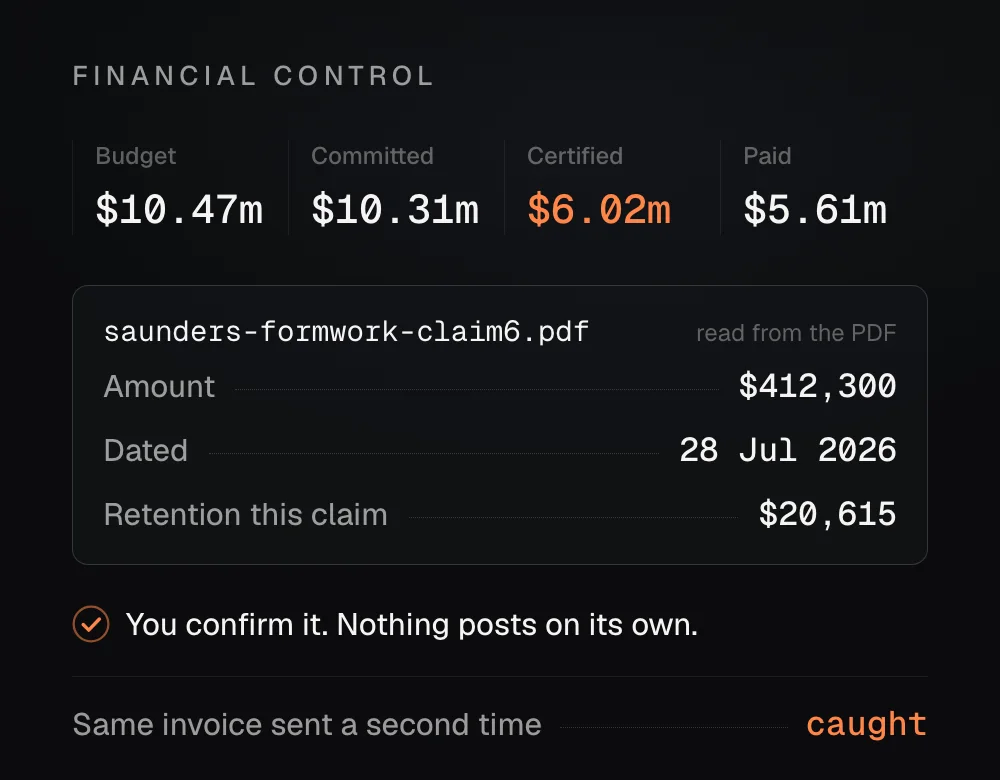
Budget, committed, certified and paid, side by side for the whole project. Drop an invoice PDF on the register and it reads itself in for your review — duplicates get flagged, and each month locks when you close it.
Funder reporting
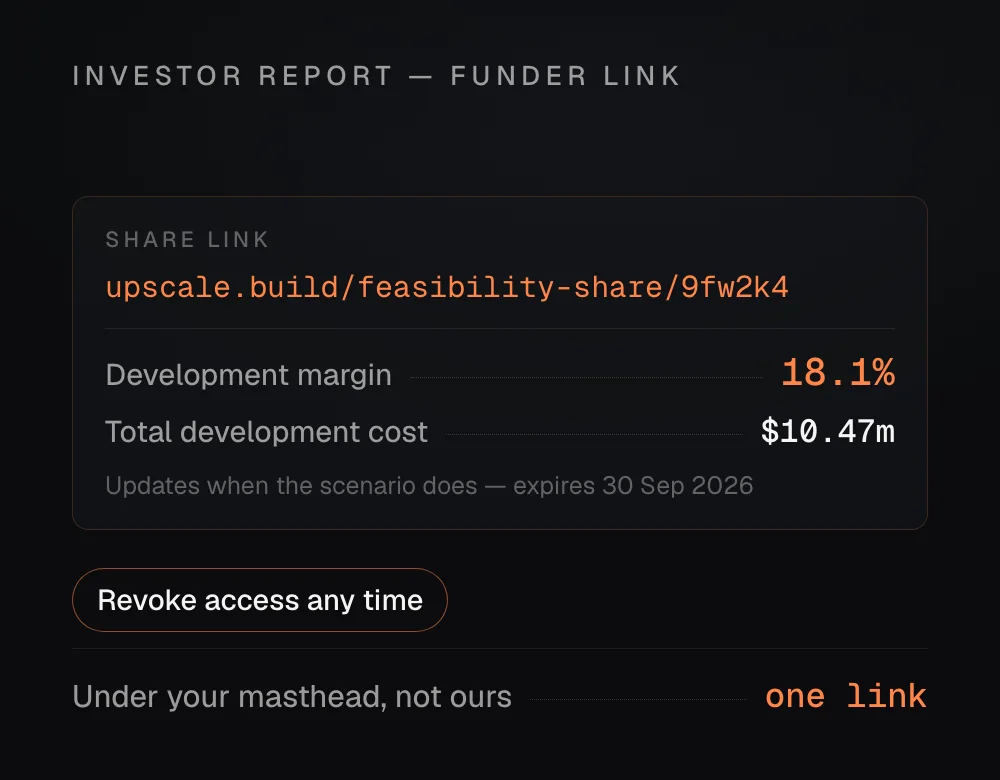
The feasibility renders as a report in the order credit teams read it, under your own letterhead, with an Excel workbook a valuer can audit. Share it as a live link with an expiry date — and revoke it the day the deal changes.
Ask UpScale
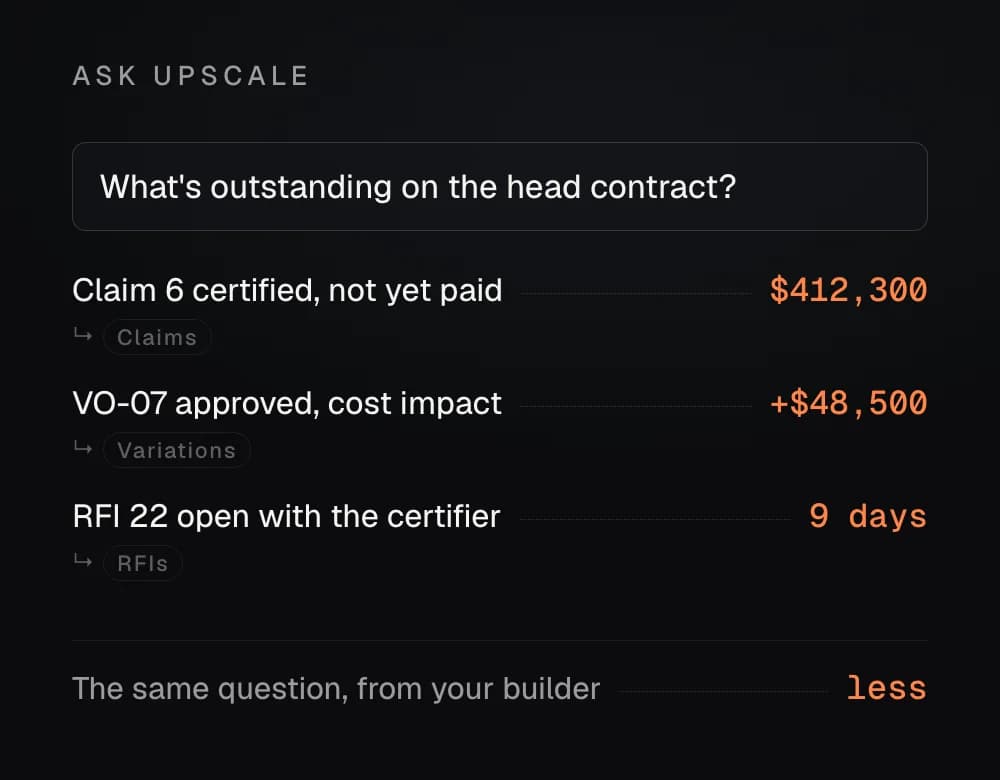
A plain question — what is outstanding on the head contract? — answered from the project's own records, citing the document each fact came from. It only ever reads what the person asking is already allowed to see.
Baseline
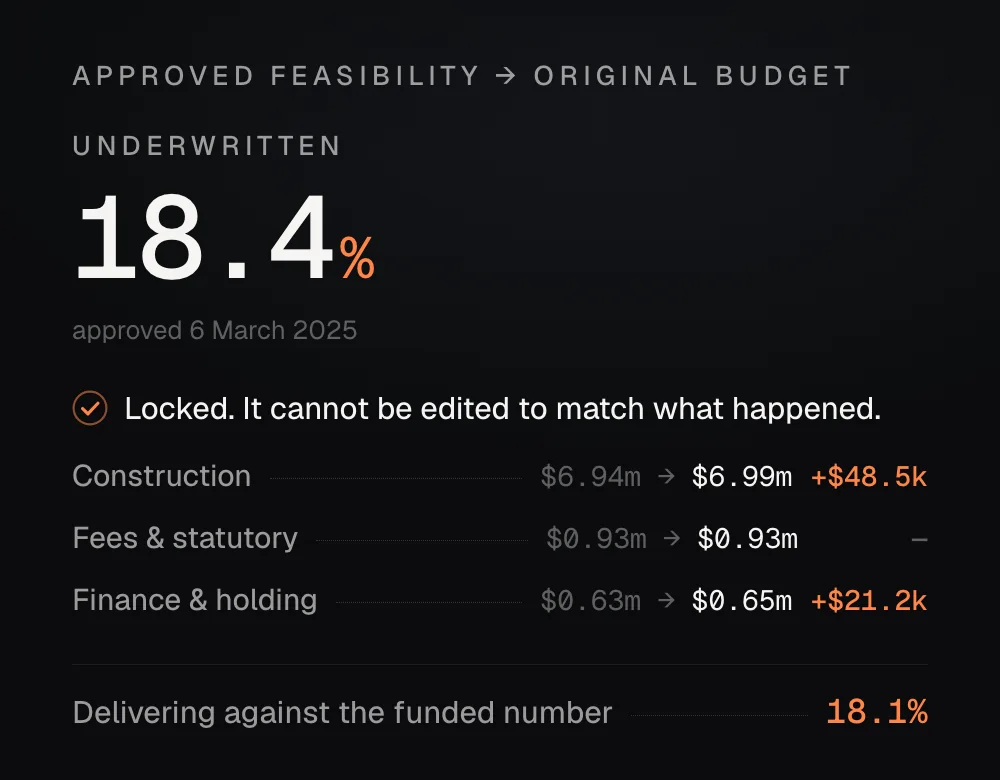
Approve a feasibility and it freezes into an Original Budget that cannot be quietly edited to match whatever happened. Delivery is then read against it section by section, so drift arrives as a line item rather than a feeling.
Overpaying for the site. Signing a price you never tested. Approving variations you never costed. Losing the delay argument because nobody wrote the week down. UpScale is built around those four, in the order they happen to you.
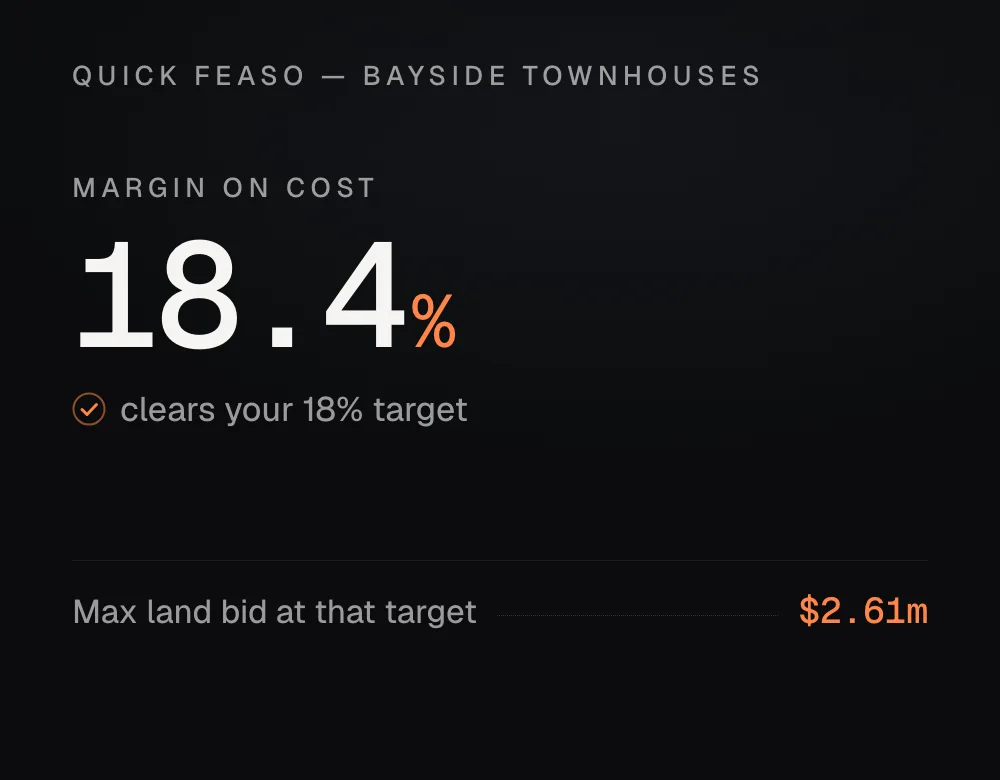
Start with the ten numbers you would scribble on the back of an envelope — a Quick Feaso answers in minutes, and your Excel cost schedule pastes straight in. Then model land, build, revenue, debt and duty properly for the state you are buying in, before the deposit rather than after it.
The margin you settle on here is the one delivery is judged against.
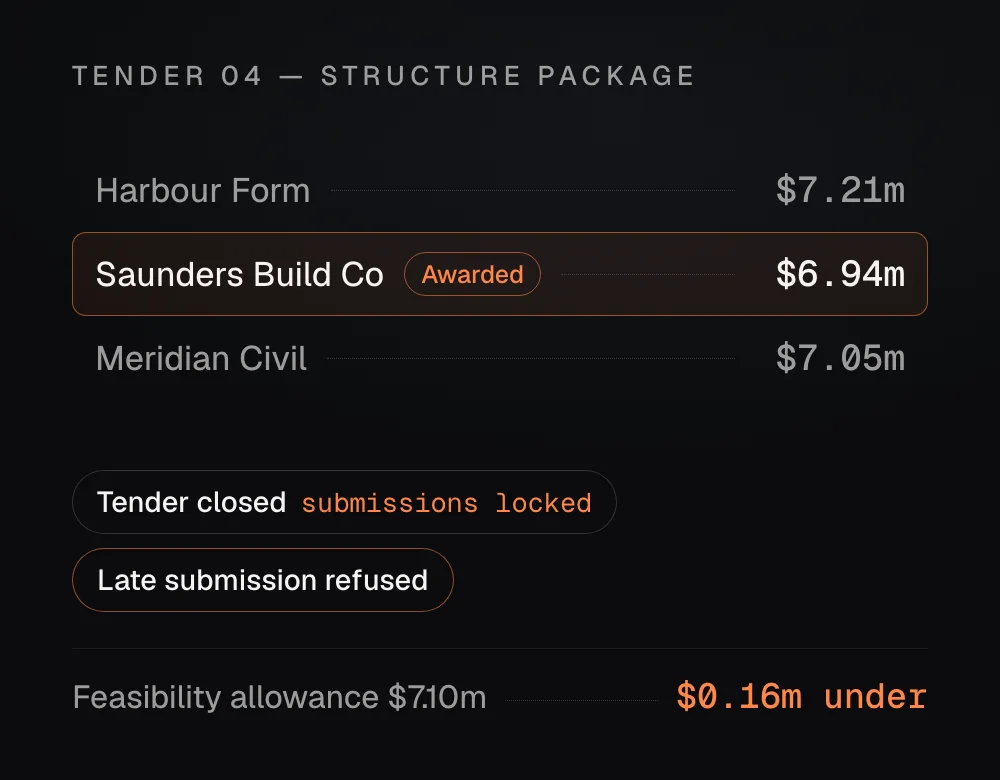
Issue packages by trade, take submissions in, and read three bids side by side instead of three PDFs in three inboxes. Award on a comparison you can show a lender.
Awarded prices land against the feasibility, so you see the gap the day it opens.
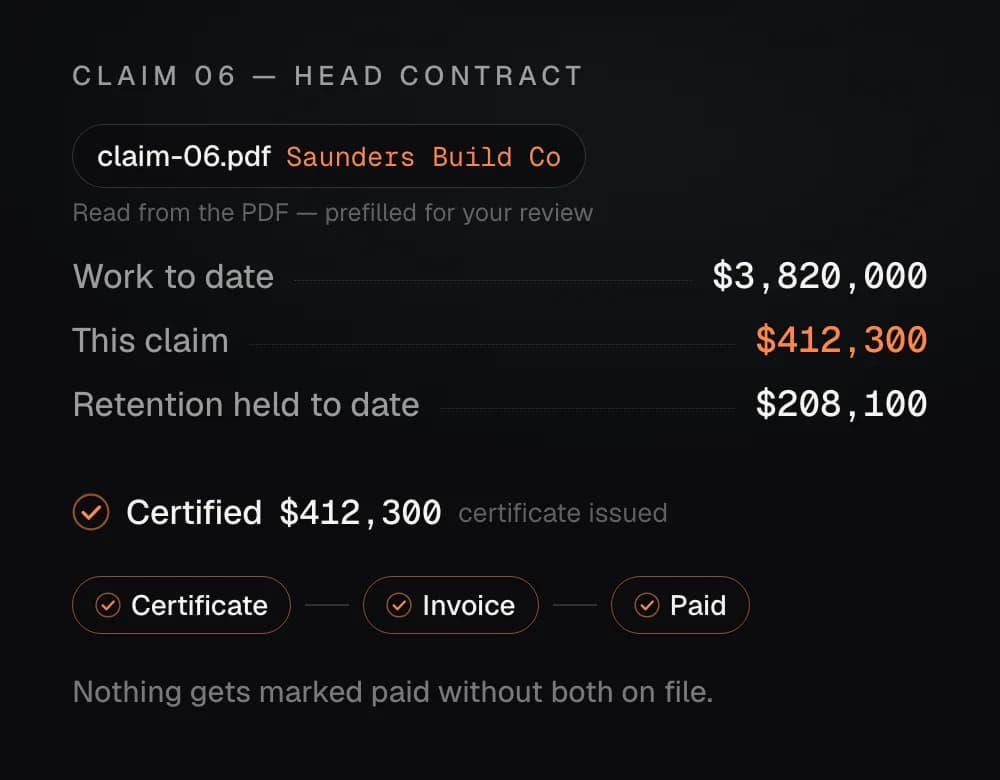
Certify each claim against work actually done, and price every variation for time as well as money. Twenty variations at $5,000 is $100,000 — the point of catching them one at a time is that you still have room to say no.
Approve it, and you watch the margin move. Refuse it, and you have the record of why.
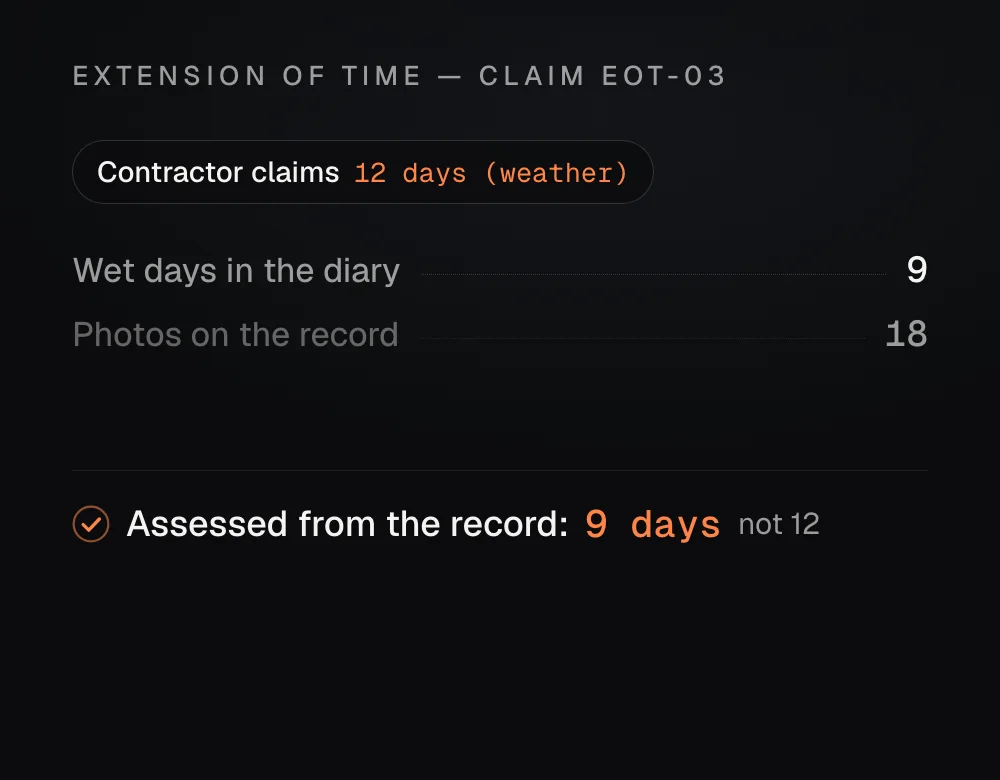
Weather, labour, plant, visitors, delays and photos, recorded on the day while anyone can still remember. The contractor's extension-of-time claim arrives long after the week in question, and by then the diary is the only thing that remembers it.
The record you kept on the day is the record you argue from at close-out.
Before it leaves your desk
The bank wants a cost to complete it can rely on. The council attached thirty-four conditions and expects nine of them discharged before you can start. The financier will read your feasibility against benchmarks you were never shown. All three go better when you have already done the check yourself.
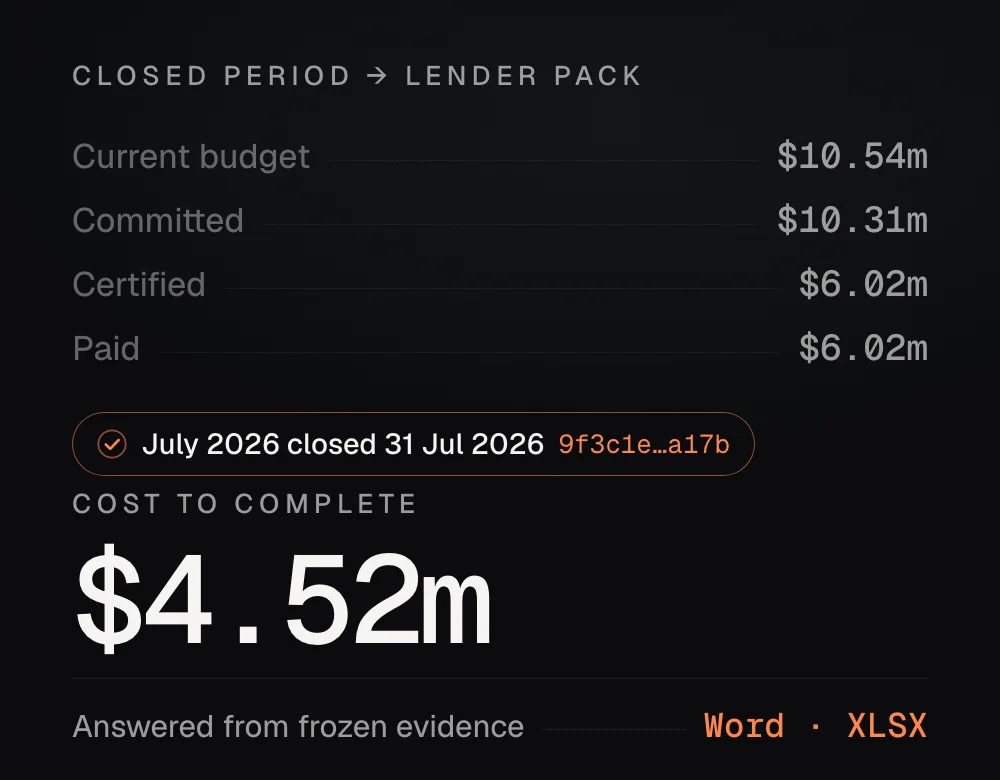
Lender pack
Cost to complete, built from the last period you closed rather than re-keyed from a spreadsheet. The snapshot behind it is pinned, so the figure you sent on Tuesday is still the figure on Friday — and it exports as Word or Excel for the credit file.
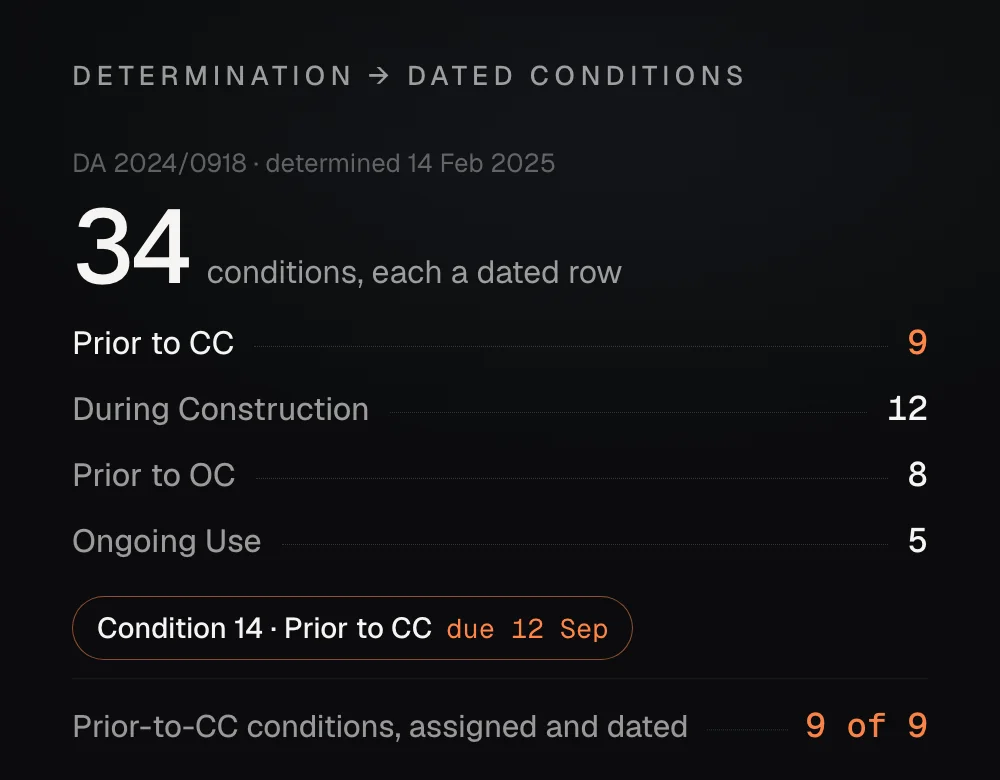
Planning approvals
The determination goes in as a PDF and comes out as dated, assignable condition rows, grouped by when they actually bite — prior to CC, during construction, prior to OC. The nine that must be discharged before your Construction Certificate stop being nine paragraphs on page 14.
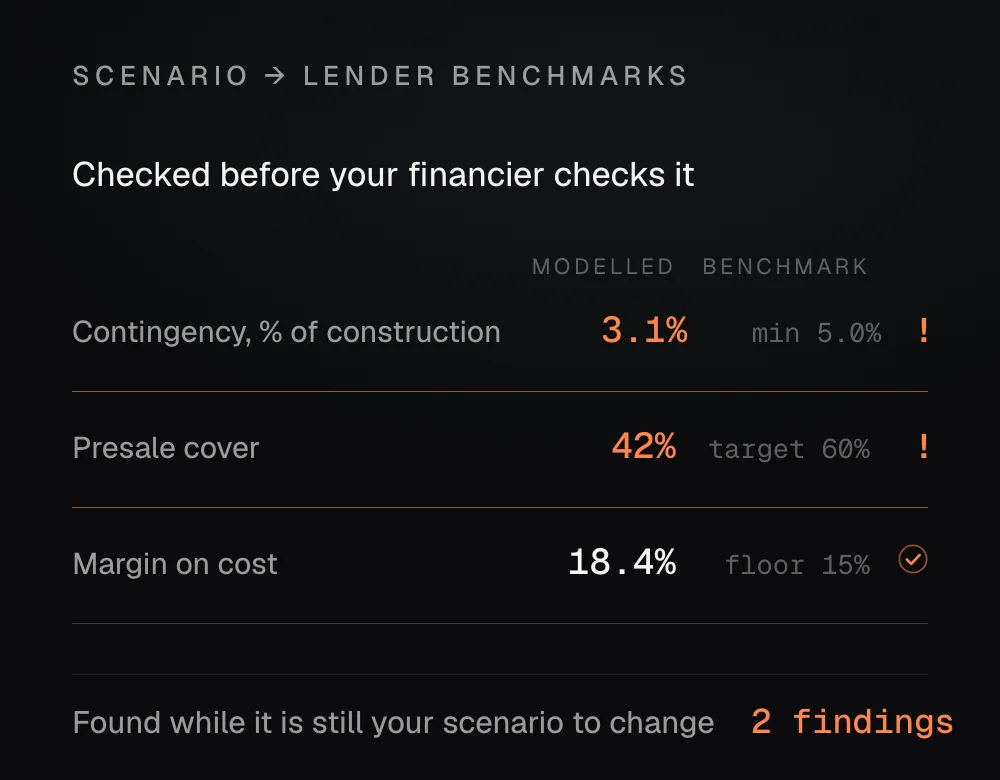
Feasibility review
A rules engine grades the scenario against published Australian lender benchmarks — contingency against the 5% floor, presale cover against your lender's target — and says which number it breached. Thin contingency is much cheaper to find while the scenario is still yours to change.
One project from the feasibility that justified it to the report you send your funder — eight steps, no narration, nothing to sit through. Watch it here rather than booking a call.
Your builder, your QS, your architect, your client — all invited free, up to 50 on a project. Nobody gets left off the record to save a licence, which is how the record stops being true.
Connect your Dropbox, Google Drive or OneDrive and the files stay in it. If you ever stop paying us, you have not lost a drawing, a contract or a photograph.
A contractor sees the packages you sent them. A client sees what you chose to share. Bringing someone onto a project does not hand them the feasibility.
A native iOS app, not a website squeezed onto a phone. Photographs and the day's record go in while you are standing in it, which is the only time anyone ever actually writes them.
Procore and Aconex are very good at what they are for, which is running a head contractor's business. If that is you, use them. This is for the side of the table that put the equity in.

I've spent years in property development — running feasibilities at midnight, chasing claims through email chains, and reconciling spreadsheets that never quite agreed.
I looked for a tool that covered the full development lifecycle. The enterprise platforms cost more than my marketing budget and took months to set up. The spreadsheet templates I'd built over the years were held together with duct tape and hope.
So I built what I wished existed: one platform that handles everything from feasibility to settlement, simple enough that the team actually uses it, and priced for developers — not enterprise IT departments.
UpScale is in early access. I'm building alongside a small group of developers who are shaping the product with me. If you're tired of the spreadsheet juggle, I'd love you to give it a go.
— Noel Yaxley, Founder
Test as many sites as you like for free. You only start paying when you turn one into a live project — and the people you invite never cost you a cent.
For testing whether a site is worth buying. Free forever, no card.
FREE UNTIL 1 JANUARY 2027
Then $149/month. Cancel before the trial ends to avoid a charge.
For running a development properly, from settlement to handover.
For running several developments at once and seeing them together.
For project management practices running developments on behalf of client developers, under your own brand.
None of this is built yet. Tell us what your practice needs and we will build it with you — and quote it — before we ship it.
Register interestPrices are in AUD. Paid plans are billed monthly and can be cancelled through the billing portal. Developer promotional access ends 1 January 2027.
Feasibility is free and needs no card. Billing starts the month you activate a project, and everyone you invite to it comes free. No setup call either way.

Read the guide

Read the guide

Read the guide